Louise Liebenberg
Part 1 on this mini series on bonding covered the more theoretical side to
bonding, part 2 will look at the practical implementation of this information.
The breeder will ensure that the bitch has had good quality food and has a safe
place to whelp her pups, ideally in an area where the livestock are. Some wool,
added to the whelping area will provide some warmth, as well providing the initial
smell imprinting. We know that scent imprinting creates a connection and curiosity
in the brain of the developing pup. Early exposure to the smell of the
livestock tells the pup that the scent “belongs” in his world. I think it is also important to handle these
very young pups so that the smell of humans is another scent imprinted on them.

At 10-14 days their eyes and hearing are opening, allowing
them to see and hear mom, siblings, sheep, and people. They will still be
confined to the whelping area at this age until about 3-4 weeks old where they
will slowly start to explore more of their area. It is at this stage that the
breeder can introduce these pups to some solid food. As they start to venture
out of the whelping area, letting them have access to kind, gentle livestock is
the next phase, and this should be ongoing until they leave the breeder. Having
gentle livestock that likes to be with the pups, is very important to
facilitate this initial bond.
As a pup learns things such as bite inhibition, fair play, social rules and
hierarchy from its mother and siblings, it is important not to remove the pup
from the litter too soon. Pups need to
learn how to be “good dogs” first. The absolute earliest a pup should leave the
litter is around the 7 or 8 weeks, preferably even a little later. In many Countries, it is law that the pups must
stay at least 8 weeks with its dam. If the mom growls at them, she is teaching
them a lesson, just because she does not feed them anymore, does not mean they
are ready to go. After that 8-week mark, most pups leave to their new homes. It
is highly recommended that the buyer continues to build on the foundation that
the breeder has created.

Before the pup comes home the buyer should be prepared by
having the area where the pup will live ready. We like to place a pup in a
smaller area with some sweet kind sheep. The stress for the pup of leaving its
litter and going to a new farm, is an opportunity to help build a bond with the
stock. Remember, a little stress helps in that forging a bond process. The livestock the pup is placed with must be
gentle, preferably used to LGD, and calm. You do not need a lot of livestock
for this but at least 2 or 3 animals so the pup learns that it can form an
attachment to all of them, and not just a specific one. If the pup is your
first LGD pup, and your stock are not accustomed to LGD, then it is advisable
to buy a few cull ewes or some bottle lambs (from the breeder) for the pup. A
pup cannot form a bond with the livestock if the stock keeps running off, or
attacks the pup. As the window of opportunity is relatively short and quite
critical, it is important that the pup has every opportunity to bond with the
stock, having the right kind of stock is essential for this process.
Often a pup will whimper and howl a little when it is separated from it litter,
many people feel the need to comfort the pup by bringing it into the house, but
remember if this pup needs to be a full time working dog and not a house pet,
then it is better to leave him with the livestock. If the pup can cuddle up
with some nice ewes it will associate the ewes with safety, warmth, and
companionship. We know that pups can form an attachment to humans easier and
quicker than to livestock, so it is imperative that the pup is given both the
time and opportunity to bond with the livestock.
It is important to allow the pup to live with, and grow up with the stock.
Integrating him into the flock directly, will be most beneficial. Pups need to
learn about sheep behaviour, they need to learn how to react, they need to
learn which animals are less tolerant of a dog, and a multitude of other
lessons. This all takes time, and the more time the pup can spend with the
stock the sooner he will learn this. The focus should be that the pup feels
happy and confident with the sheep, and that he is content to be with them. Too many distractions and too much time spent
away from the stock certainly hinders this bonding process.
I am NOT advocating to never touch or
handle the pup, or even comfort him. On the contrary, please go to the sheep
pen and spend time with the pup, let him see that you are also a part of his
world, that sheep are important to you and that all the attention he gets from
you is with the stock. He will soon learn that this is truly the sweet spot to
be. I will usually check up quite
regularly on the pup, to feed him and give him some attention. When you leave
the pasture, he should be content to go back to the stock, if he wants to
follow you out, then this is a great opportunity to reinforce the command “go
back to the sheep” or “stay”. Ensure that this initial bonding area is also a
mini Alcatraz, so that the pup learns that he cannot, and should not even try
to escape and leave the pen.
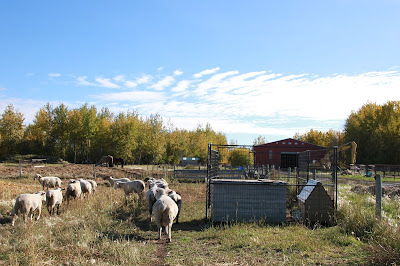
We usually place a “puppy only” kennel in the pen with the sheep. This is an
area that only the pup can get into, if it needs to retreat from the sheep, or
eat alone, take a nap or whatever reason, it is the safe spot for the pup. The
pup can go in and out, but the sheep cannot get in.

Your biggest role is to facilitate that initial sheep/dog bond. By facilitate I
mean, providing the correct type of livestock, allowing him the time to bond to
the stock, building a safe kennel for the pup, if needed, fence in a smaller
pen for the pup and the sheep, and to socialise the pup to other things such as
other animals, farm equipment, kids, and vehicles. This is also a great time to teach some basic
obedience commands, that will make your life a whole lot easier once he is an
adult. While in the pasture teach him to come, sit for petting, walk on a lead,
tie, groom, and basic veterinary checks (ears, eyes, nails etc.).
As the pup grows, you can provide him with some new situations to expand his
learning, perhaps add in a few more sheep, enlarge the area he is in, or allow
him to be with some of the other guardian dogs. By the time the pup is around 4
months old, this initial bonding window (between 7 and 16 weeks) will close,
and a new phase starts. This window for bonding is not set in stone, and the
initial period of bonding does not end abruptly at 16 weeks, some older dogs
can be bonded to livestock later, or the period may extend longer in some dogs.
It is not so, that a pup that has not had this initial bonding opportunity will
never work out as a LGD. Providing this time to bond with the stock means you
have optimised that natural developmental phase of the pup and provided the
best possible opportunity for the pup to become successful in his job.
Certain things can hinder the bonding process to livestock, things such as
fear, pain, isolation, a lack of time spent with the stock, and conflicting
distractions. A pup bonded to livestock, can also be sociable to humans. There
is no harm in petting and loving the pup, but just do it in the pasture with
the livestock.
How do we know if the pup is bonded to the sheep? The pup will be relaxed and
content to hang out with them, he will lay around a feeder/water trough with
them, lay close to the sheep, he will be attentive to them. He will trot off
back to the sheep when you leave, he will greet them, he will lick them around
their face, he will be alert if the sheep startle and he will be submissive
towards them. You can see by the behaviour of the sheep too that they are
comfortable with the pup, some old ewes will nuzzle the young dog, they are
calm when the pup moves around them, they are not fearful or constantly running
off. A good sign that a pup is bonded with the livestock is when the animals
move off to graze a new area, the pup happily follows them and hangs out in
this area.

Ultimately, the most important factor to successful LGD, is
the owner. The owner choses the best pup from good working lines, he buys from
a breeder who will provide the pup with a healthy start and excellent learning
opportunities. It is the owner who will
continue this education through facilitation, guidance and providing
opportunities for the pup to learn and grow into its role as a LGD.