Wednesday, 8 December 2021

Attitudes toward LGD


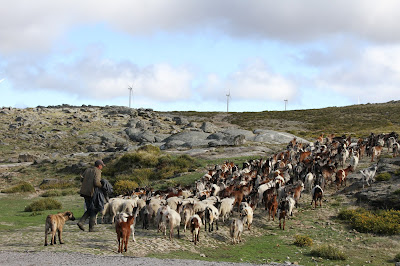
A shepherd heading out with his goat herd for grazing in an area in Portugal that has a high wolf population. This dog was provided to him through a wolf conservation organization. They supplied the dog, feed, veterinary care, and ongoing education on using LGD to mitigate conflicts between livestock and wolves.

Attitudes toward LGD
©Louise Liebenberg (2021)
Written for The Shepherds Magazine

It is interesting to see how attitudes vary regarding using livestock guardian dogs (LGD) to protect livestock against predators. For me, it was simple, I am passionate about my ranch and all the animals on it, I appreciate all the wildlife we have, and I like dogs, so I saw the use of LGDs as a benefit, and positive addition to the ranch. However, not everyone shares this view, it is interesting to look at these attitudes and what affects them.

In countries where the use of LGD is still a strong tradition, the attitude toward LGD is positive and there is high acceptance of them by local people. These shepherds understand that LGD and sheep belong together, in many instances the shepherds are proud and positive about their LGD. In many of these countries it is tradition celebrate the use of LGD. In Turkey, a Sivas Kangal festival is held to honour these dogs. In Macedonia, tribute is paid to the Sarplaninac dog by having an image of the dog on a coin and in some countries, where the dogs protect the sheep from wolves, the dogs are adjourned with flowers and paraded through the local villages.
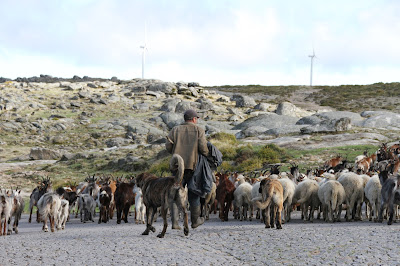

In regions where the wolf has long been extirpated and now making a comeback, the attitudes are less positive. Many ranchers and shepherds I have spoken to, feel that using LGD has been forced upon them due to wolf reintroductions or through “rewilding” programs. They view the use of LGD as tedious requiring additional management practices and a higher cost on their livestock operations. Some shepherds feel that by using LGD, implies acceptance of wolf reintroduction, a “giving in” to government pressure. Some people question why do they need to invest in LGD, and their training, to keep the livestock safe when the government is initiating this reintroduction?  Not using LGD, it is a form of resistance to these Government programs, rather than an actual negative attitude toward LGD.  Some shepherds feel they can “show” how disastrous wolf reintroduction is, by having higher losses from predators by not taking measures to protect their flocks.  It can be used as a lobbying point for higher compensation payouts, both for livestock deaths, as well as the additional costs of using LGD.  Many of these ranchers and shepherds feel that using LGD sends a message of compliance to the reintroduction or protection of wolves and other predator species.
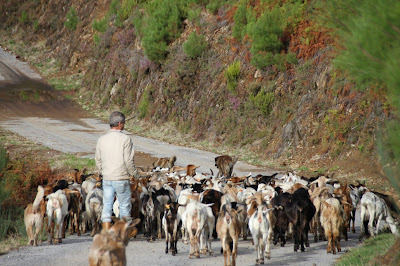

There is no historical tradition for using LGD in the United Kingdom (UK), yet they do have a long history for breeding very talented herding dogs. The border collie is the main “sheepdog” in the UK. There is no tradition to using LGD and many shepherds find the concept of having a very large dog living in among the sheep alarming.   In the UK, most shepherds have a very negative attitude about (pet) dogs in amongst their sheep due to them chasing and worrying them. The shepherds in the UK understand that border collies (or other herding dogs) cannot just be left unattended with sheep, as this can result in death and injury to them. As public walking paths can, and do, criss-cross through farmers fields, a lot of sheep deaths are caused by the general public’s dogs getting off leash and end up chasing, harassing, and killing sheep. It is an offence to allow a dog to worry sheep in the UK and has been drummed into the public’s head that dogs and sheep do not go together free, in a pasture. I have spoken to many British sheep farmers and the idea of a LGD living in with the sheep full time is concerning for them. It would take a lot of education and perhaps many years to have any kind of acceptance for LGD to be working with sheep flocks. A secondary issue would be the potential for conflict between LGD and the public. As walkers do have free access to farmers land, having a LGD free in with the livestock might create issues with the LGD being aggressive towards walkers and their pets. There is no culture in the UK for using LGD, so many shepherds generally have an attitude that LGD cannot and will not work in their situation.  A similar situation exists in Switzerland with public access to walking trails and the potential for conflict between the hikers and LGD. Signposts and videos on how to behave are being promoted by the government to help educate the public.

When I lived in the Netherlands, we had our LGD in with the livestock to primarily protect the sheep against people’s loose pet dogs. We lost over 24 adult sheep in one night, a pair of dogs got free and started “playing” with the sheep. This prompted us to look at using LGD to provide protection for the sheep. At that time, the largest wild predator in the Netherlands were foxes. The biggest predator issue was caused by pet dogs. We were one of the first shepherds to use LGD with our flocks. Getting our first LGD caused quite a stir, as we left our LGD “unattended” in the pasture with the sheep. This was regarded as a form of abandonment by the local authorities. No amount of convincing on our part could persuade them that LGD and sheep need to live in the same pasture. It ended up with us having to take the dog home at night, not an ideal situation. Since those initial years, wolves have drifted back into the Netherlands and some shepherds are now looking to using LGD to protect their flocks from these wolves. Concerns around public opinions, barking and potential aggressiveness will need to be addressed in the Netherlands before LGD will truly be accepted as a tool to mitigate conflict between predators and livestock.

The attitudes towards LGD varies among conservationists, some feel that having large dogs in with the livestock will have a negative affect on non- predator wildlife species, causing disruptions in their behaviour and potential harassment of deer, elk, and other animals.  Some conservationists feel that LGD affect the natural behaviour of predators and that is unacceptable to them. Research has shown that this is true, LGD do affect how predators behave and react around flocks that are guarded by dogs.  Other people have voiced their concerns as to the claim that LGD are an effective “non-lethal” mitigation tool to livestock and predator conflict, as a LGD will kill a coyote or other small predators if they can catch them. Although it is not very common that LGD kill predators, it certainly does happen, most times the dogs interfere with hunting patterns and push predators further away from the flock without the need to actively engage predators in a fight.  The “non-lethal” only applies to the owner not killing the predators, not the dogs! Many conservationists do however see that using LGD is a way to directly reduce conflict between predators and livestock, many are willing to assist in implementing the use of LGD within flocks. Some groups go as far as providing LGD to shepherds, educational programs, and support. In Canada in the province of Saskatchewan, sheep keepers can apply for a grant to purchase a LGD puppy as the Government feels that using LGD is a sound method to help prevent predation.
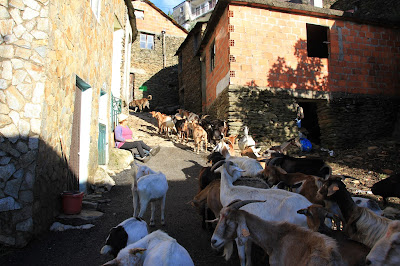
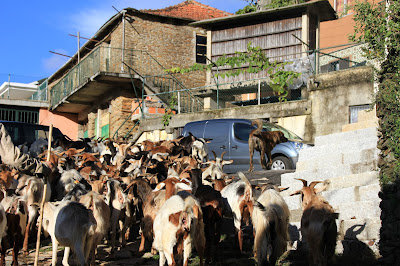
The acceptance of LGD in traditional shepherding areas is high. This shepherd walks his goats and LGD through the village to their grazing area every day in Portugal. Neighbors do not complain about this as it is accepted by the community.
In many countries including Africa, USA and even traditional LGD regions, the general satisfaction for using LGD is very high. Shepherds value having LGD in their program and do see the benefit of reduced losses, access to grazing areas that were potentially not useable due to predation and of course peace of mind.  The attitude toward LGD can fluctuate due to external factors such as changing polices regarding wildlife, livestock prices, fluctuations in markets and long term, sustained predation of livestock. If the rancher cannot make a living with the livestock due to low market pricing, every additional cost to the operation can be considered too much. Investing in LGD, feeding and vet care are all additional expenses that need to be carried by the livestock operation.
Attitudes towards LGD are also very dependant on the level of effort required to get a sound and reliable dog. People who have had LGD that have pulled wool and bitten the livestock, tend to be a little more negative about the use of LGD.  I have met people where the LGD has caused the death of some of the livestock, and this has a dramatic effect on the positivity towards the dog, and LGD in general. A lady I know, whose LGD pulled wool  and chewed some ears off the lambs has decided not to use LGD, primarily due to the amount of work and the risk it may pose to her livestock and has opted instead  to implement other methods such as fox-lights, electric fencing and night penning to protect her stock.

I believe the majority of ranchers, in a high predator areas, are positive about using LGD. Many wildlife and conservation organizations also see the benefit of finding ways to reduce conflict between predators and livestock.  The biggest challenge might ultimately be convincing the public (who feel that all dogs should “fur-babies”) that using LGD and other working dogs, is not abusive or neglectful.
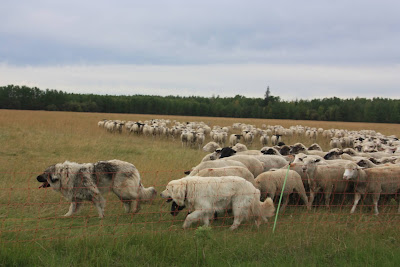
Two LGD leading the way for the flock to the night corral in northern Alberta. The dogs allow for sheep to graze pastures further away from home that would otherwise not be available for the sheep to use.


Wednesday, 6 October 2021

Introducing a new LGD puppy


The submissive behaviour of the pup is clear. The pup has its ears drawn back, licking behaviour around the mouth, low body posture and low tail. It is a bit harder to see but the eyes of the pup have a soft and friendly expression. The older female is calm, ignoring but her attitude is gentle towards the pup. These are all good signs.


How to introduce a new LGD puppy into an existing pack of LGD

©Louise Liebenberg (2021)
Written for The Shepherds Magazine

I have in a previous article discussed how Livestock Guardian Dogs (LGD) and other farm or ranch dogs interact together, in this article I would like to focus more specifically on the introduction of a new LGD, pup, into an existing group of LGD.

Introducing a new LGD puppy between the ages of 8 to 12 weeks, usually goes without too many problems provided, the existing dogs demonstrate normal dog behaviour. Most dogs will willingly accept a new puppy into the pack. Older males will often display a certain level of uninterest after the first introductions. An older female can show a little more disciplinarian types of behaviours. If the puppy irritates her, she will most likely snap, growl, “hold” the muzzle of the pup or roll the puppy. It is often a lot of noise, but little harm is done. The pup will howl and whimper and do as if he is seriously injured. In most cases, it is just his ego that is put out. A younger male is generally the most sociable to a new pup and will often display a lot of enthusiasm and play behaviour towards the pup. Younger males make excellent companions for pups. Females can be a little bitchier than their male counter part, but usually will also engage a little more with the pup.

Some pups can be totally overwhelmed when meeting new dogs. These pups can sometimes show defensive behaviour, growling when another dog approaches them. Care must be taken with these pups that the older dogs do not react negatively towards them because of this.  It is a good idea to let the pup settle in, rest, eat and relax a bit before introducing them to the other ranch dogs.  Waiting a few days might not be a bad idea. These pups often react poorly simply because they are stressed from being separated from littermates and travelling to a new place. The change of livestock can also be a stressor, take things slowly and ensure he or she is placed in with kind ewes so that the pup does not get hurt by the livestock, most working raised pups will be happy to be with the sheep. An indirect way to start introducing the new pup is through scent. The scent of the pup will be on you, so when you feed and interact with the other dogs, they will start “knowing” the pup through its scent being on you. 

It is easier to introduce an 8-week-old pup to the existing pack than it is an 8-month-old. Older pups can be rather rambunctious, and some may react a little more aggressively towards the established dogs. Reading the behaviour of these older pups is essential during introductions. If it looks like he may react aggressively it might be a good idea to first let him meet an opposite-sex dog first. You really want to avoid any form of conflict during the introductions as that could set things off on the wrong foot. Dogs do hold grudges, and if things go wrong initially it might be awfully hard to convince either dog to get along. 

This is a fence line meeting. Both the pup and the adult male are showing relaxed behaviour and they want to hang out together, as both are in the same corner. The male shows some interest, and the pup is calm. I would have no concerns placing these two together at this point.

Observe the body language to judge how acceptive your LGD are of the puppy. If your adult is showing friendly and curious behaviour you would expect to see a relaxed posture, slow tail wagging, a higher tail set, butt sniffing and even some invitation to play, like a play bow. These signs tell you that the adult is happy to meet the pup and it will be okay to let them interact. If the adult dog is showing more hostile behaviour such as ears pulled back, rigid body, tenseness, growling, snarling, stiff legged walking, lip lifting, hackles raised you really want to be careful as anything could trigger this adult to attack the puppy. Take introductions to this adult very slowly and carefully.


Behaviours the young pup might display when meeting new adults are generally submissive in nature, low tail wagging, rolling over onto back, some mouth licking, crawling and low to the ground, tail between their legs and urinating. These are good signs as it shows that the pup knows how to respond correctly to strange dogs. He is being submissive and respectful, and every normal adult dog will not harm a pup that is displaying these behaviours.

The safest way to introduce the new pup is to allow them to meet on neutral ground. Dropping the pup off in the pasture the resident LGD lives in, can be a little intrusive. Try introducing them in a field where there are no sheep, toys, or a shelter that the resident dog might feel the need to guard. Some older dogs can be very territorial so meeting at a fence line can result in the older dog wanting to guard his area, similarly, a dog who is tethered can be are very protective of their space. If you do fence line introductions take both to a neutral area for the initial introductions.

Keep the pup (and the resident LGD) on a lead, set the pup down outside the fence and just observe both dog’s behaviour. If both show curiosity, and friendly then bring the pup into the field where they can engage in butt sniffing and other social meeting behaviours. Ensure someone is with you to keep control over the adult, “just in case” things do not go well, this way you can control the interaction. Be aware of your own role in these interactions as you might be the trigger to cause some tension. The resident dog might feel some jealousy towards the pup, or attention seeking behaviour could be a reason for stress. Try and remain very calm and neutral and just observe what is going on.  For the most part these meet and greets do go well.

An adolescent LGD meeting a mature dog in our LGD team. You can clearly see the submissive behaviour of the younger dog to the right, low body posture, tail low, sniffing/licking around the mouth. The older dog has her tail raised, but her body language is not aggressive. The younger dog is showing deference to the older dog.


You can expect the older dog to possibly growl at the pup or show some dominant behaviour toward the pup, however it should not be threatening. An older dog will very quickly place boundaries on a new pup which is not a bad thing. Reading the dog’s behaviour is important to know when the adult dog is being aggressive and can harm the pup, or when it is more corrective and simply warning the pup.
Most dogs work out their social ranking quickly and learn how to interact in a positive way. I have found with my own dogs that they are very tolerant of a pup; however they will reprimand a pup for being overly enthusiastic, irritating, obnoxious and not being mindful of their space and food.

I feel that most of these introductions go well provided both pup and adult dogs are well adjusted and show normal dog behaviour. Small things like taking out food, bones, and toys to reduce the potential of conflict is always a good thing to do.  I have a safe puppy kennel in the pasture so when I am not around to supervise these interactions and to ensure the safety of the young pup, I will place the pup in the kennel. Here the pup can eat, sleep, and still see what is happening in the pasture and be in contact with the other dogs.

While some dogs delight in welcoming a pup into the house, other adult dogs do not open the "welcome wagon". If the adult dog is not friendly, introductions might need to take longer, particularly on neutral ground and on a lead. Sometimes the older dog needs a few more weeks to warm up to the pup and that is okay. If the adult does not accept the pup within a few weeks, while the pup shows good behaviour, the adult dog may have some behavioural issues that could make it hard to have more dogs working with it.

I think the key to good introductions depends a lot on the owner’s capability to read dog body language, to remain calm and to not make a big deal of it. I have expectations of my own dogs to accept my working border collies, any new LGD pups I add into the pack, to accept new livestock or even a different species of livestock. My LGD are expected to behave in a normal and natural way and if they do not, I will step in a reprimand or correct unwanted behaviour.

This is a fence line meeting. Both the pup and the adult male are showing relaxed behaviour and they want to hang out together, as both are in the same corner. The male shows some interest, and the pup is calm. I would have no concerns placing these two together at this point.

Friday, 13 August 2021

What LGD breed is best for my situation?


A shorted coated Estrella working in Portugal. The Estrella also comes in a long-coated version.

What LGD breed is best for my situation?
©
Louise Liebenberg (2021)
Written for The Shepherds Magazine


 With over forty different breeds of Livestock Guardian Dog (LGD) breeds, a common question is what breed would work well for a specific situation. Often, the responses are as simple as “I love my … (breed name)”. Rarely do people explain what makes “their” breed unique or why they chose them.  Over the past four decades, several researchers have tried to establish which breed is the best. Coppinger and his colleagues compared Anatolian, Maremma, Sarplaninac and, crosses between these breeds. More recently, Daniel Kinka and Julie Young compared Kangals, Karakachan, Transmontanos and White Dogs (a generic name for a cross of white LGD often found in the USA).  The conclusion from their study was that most of the breeds are more like each other, than different (in regard to working style). This should not be a huge surprise as all LGD have the same job to do and it makes sense that these breeds would be similar in how they respond to predators.

The athletic and reliable Turkish Akbash working on a sheep ranch in Northern British Columbia, Canada.

It is also hard to compare breeds as every working situation is unique, the predators that the dog is expected to protect from, can range from raccoons and weasels to bears and wolves. Even the pressure that certain predators place on the flock varies, in some region’s wolves are thick and in other regions there may be none. How flocks are managed can affect how the work of the dogs is perceived. Owner bias makes comparing breeds difficult as each person will value different traits, temperaments, and abilities all within their own reference point. Sometimes, the lack of good statistical data can get in the way of fair comparisons, if you are studying a population of thousands of dogs, the data will generally be more accurate than if you are studying just a handful of dogs. An example of this is the Great Pyrenees (GP). The GP is often associated with roaming, however there are probably more GP and GP crosses than any other LGD in North America. Yes, these might roam more, simply because there are so many more GP around.


A white Sarplaninac working in Northern Alberta, Canada on a sheep and cattle ranch.


Gross generalizations about breeds are of course, not really the “right” thing to do, for every generalization, hundreds of exceptions will be found. In some instances, there might be more variance between individuals within a breed than between different breeds. However, most people still like to know some of these generalizations, to be able to narrow down which breed might suit their situation best. I know making such a comparison is “treading on thin ice” as some people might feel their breed is being misrepresented. My advice to people looking for LGD is to meet breeders, talk to fellow livestock owners and visit with various dogs. The breeder might ultimately, be more important than the breed itself, as it is the breeder who can help and mentor you while learning to work with LGD.

I do believe, it is primarily, the wolf, that has shaped the behavior and temperament of our LGD, and this can be reflected in the reactivity and aggression level in LGD. The first gross generalization I will make is; if you look at the map of Europe and move from west to east, the breeds tend to get harder the further East you go.  Why would this be? Perhaps it has to do with the number of years that the wolf has been extirpated in certain countries. Wolves were officially declared extinct in France in the 1930s. It is only since the 1990’s that wolves have really started drifting from Italy back into the French Pyrenean Mountains.  Before this, few Great Pyrenees dogs had seen or faced a wolf for many generations in their home country.  With no need for the GP to be aggressive toward wolves for close to 60 years, perhaps this led to selection of milder natured dogs who display high nurturing traits as opposed to high aggression traits. Italy has been a stronghold for wolves in Europe when many other countries had extirpated them. Regions where wolves have always existed, shepherds have always worked with their Maremmano-Abruzzese Sheepdogs. The “Maremma” would rate higher for protectiveness simply due to the ongoing selection for dogs to be able to work in wolf territory. Russia and central Asia has a large population of wolves (wolves were never extirpated here) and is home of the Ovcharkas. Breeds that are large, powerful, and regarded as high aggression breeds. Predator density plays a big role in the selection of aggression and ferocity in LGD.

People asking which breed would work best for them, often have a list of criteria for the future LGD, these can include no roaming, barking or must be super friendly to visitors and tolerant of dogs. It really does need to be mentioned that all LGD like to roam and expand their territory. All LGD bark, that is part of their working strategy. Incessant barking is often found in immature dogs. Friendliness to strangers can be encouraged through more intensive socialization, however some breeds are naturally more standoffish. As for tolerance towards visitors’ dogs, it is unfair to expect the LGD to be tolerant to strange dogs and yet protect again canine predators.

A pair of working Sarplaninac dogs guarding goats in the mountains of Macedonia.

I am going to make some broad comparisons, as this may help people narrow down certain criteria that people starting with LGD might find handy. I will also include the common abbreviations for the breed names as I go along. I think ideal LGD to start with, are those breeds that have been used for many years in North America. I have selected the more common breeds for this overview and breeds I have some experience with.

Good breeds for the inexperienced homes or ones looking for an easier going temperament may include Great Pyrenees (GP), Maremma, Akbash, Anatolian Shepherd Dog (ASD) and Spanish Mastiff (SM). Breeds that are sharper in nature and possibly better suited to high predator areas would include:
Kangal, Central Asian Shepherd (CAS), Sarplaninac (Sar or Shar), Karakachan, or Kommondor (Kom).  This does not rule out the easier breeds cannot work in high predator areas, I know many that function well; however their temperaments are perhaps a bit easier to get along with.

Breeds better suited for warmer climates: most LGD breeds are double coated however some have a shorter length coat. These would include Akbash, short-coated Estrela Mountain Dog (Estrela), Kangal, ASD and CAS.  Longer coated breeds include the Maremma, GP, Sarplaninac, Karakachan. Corded coat is the Komondor and will require a lot of coat maintenance.

Athleticism or breeds that need to cover larger areas. These breeds are often found in Europe and Asia on the more steppe type landscapes include the Akbash, Kangal, ASD some Maremma and CAS. The mountain types are often heavier coated breeds and more stout body types. These would include the Great Pyrenees, Sarplaninac, some Maremma and Karakachan.
Depending on lines the Spanish Mastiff can vary from big and heavy, to sleek working types. Some breeds have such variance a lot will depend on what each breeder selects for. Some are described as “show type” vs working type.

Coppinger in his studies talked about trustworthiness and compared some breeds for this trait. I think some breeds may require more supervision and guidance as young dogs.  Breeds that may be easier to start and that have a high trustworthiness can include the GP, Maremma, ASD and Akbash. Breeds that may require more supervision may include the Sarplaninac, the Kangal, CAS and some Maremma, as they are late maturing and this may lead to some more extended play periods,

Certain breeds are more driven to run down and chase predators while others are content to bark and warn predators away. The more driven breeds would include the Kangal, CAS, Sarplaninac, while the ones possibly more content to stay around closer to the flock would include the GP, Maremma, Karakachan, the Estrella, SM and Akbash.

Size, many people feel that to be an effective guardian dog working with apex predators, they must be large. Size is not so much an issue, I believe character, determination and a certain degree of aggressiveness is what makes the difference. Some breeds are just more willing to fight and are naturally more aggressive than others. Large sized breeds are SM, Caucasian Ovcharka and CAS.
Medium sized breeds include Maremma, Estrella, Karakachan, Sarplaninac and Great Pyrenees. Tall breeds include Kangal, ASD and Akbash.

Some people only want white LGD, this will limit the breeds to chose from to Kuvasz, Polish Tatra Kommondor, GP and Maremma. Many LGD are coloured.

Availability is often an issue. The CO is regarded as a high aggression breed, but it is virtually impossible to find good, working CO. Most are bred for show or as guard dogs for pet homes and very few are bred in North America as LGD. Similarly, with the Sarplaninac. Most Sarplaninac imported to the USA are from show breeders and for many generations have not been used as LGD. The Sarplaninac and many of the other breeds, have also been used for dog fighting in their home country, breeding selection has been based on dog fighting. Many of these dogs fail as working LGDs, simply because they do not posses the traits of nurturing, calmness, and attentiveness towards the livestock.

Each breed brings a unique balance of “skills” to the proverbial table, and to the discerning buyer, the right breed for their situation is “out there”. Some ranchers like to use a combination of breeds, the feel this maximizes effectiveness whereas I feel each breed has the capabilities to fulfill  all the roles required to protect the flock.


Related Posts Plugin for WordPress, Blogger...