Sunday, 9 August 2020

Do they have "it" or not?


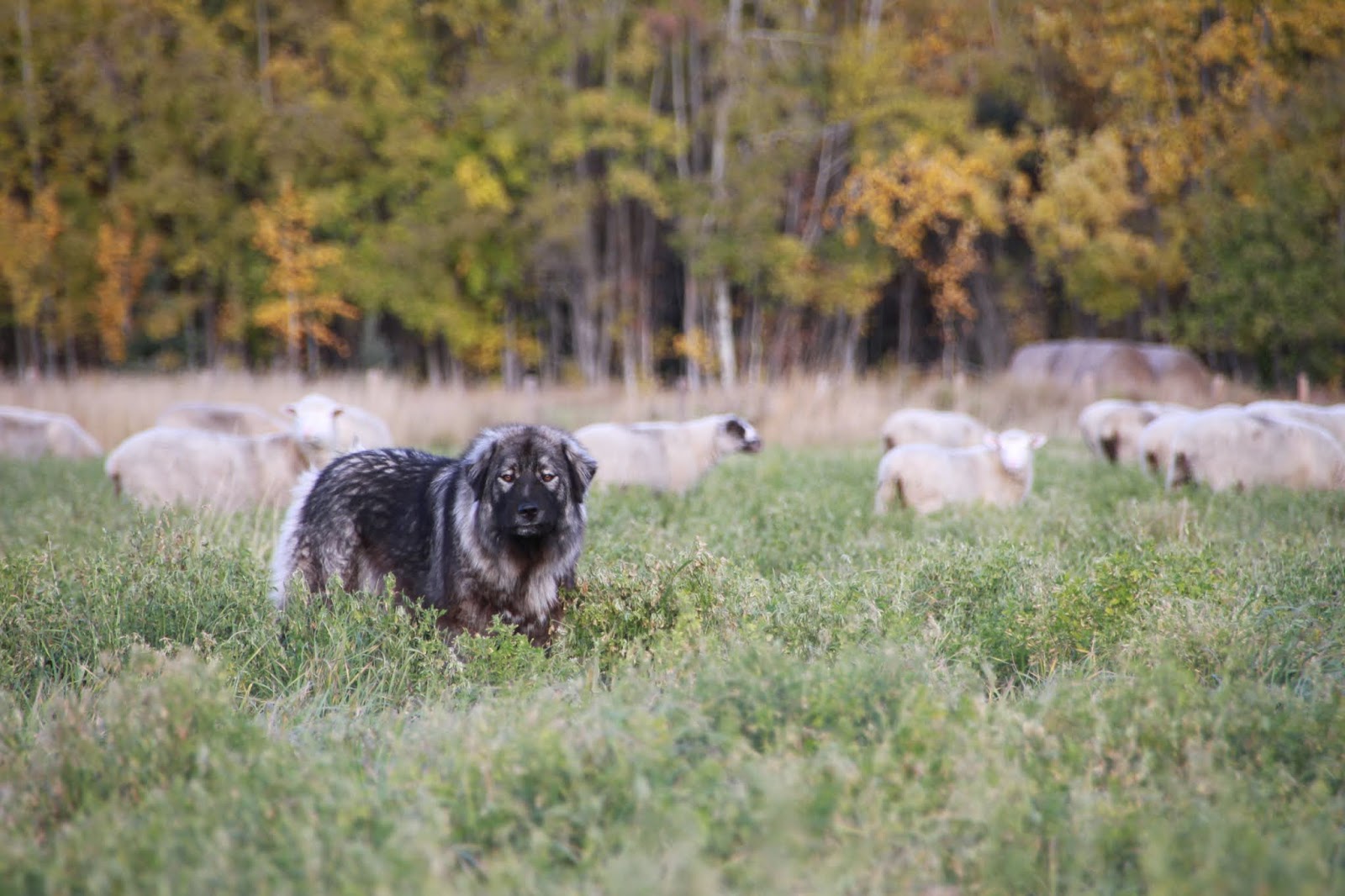
This dog has it all, attentive, protective, and trustworthy. He did require some corrections while in his adolescent years, and never missed an opportunity to make go and visit some of the other ranch dogs. Except for those minor flaws, and his intense dislike for strange cats, this dog had “it” all.

Do they have "it" or not?
©Louise Liebenberg  June 2020
Written for The Shepherds Magazine

My friend Jill, from Northern California, asked me if I thought that livestock guardian dogs either have “it” or not. It is of course an interesting question to ponder. Before, I can delve into this, I think “it” needs to be defined. I am assuming Jill means the traits, character, and ability to be successful Livestock Guardian Dogs (LGD) without much involvement of the shepherd (beyond the normal facilitation in raising and bonding). The “it” refers to the part that the dog brings to the “table”, both in traits and character.

I do believe that some dogs do just have it. These dogs are solid, reliable, and trustworthy with the livestock right off the bat, with little to no additional guidance from the shepherd.  I also know that other dogs can be reliable and trustworthy but may require some more time and input from the shepherd. Finally, there are other LGD who are never trustworthy and no matter how much time and effort the shepherd puts into them, they just do not have what it takes to do the job. Some dogs can even be partially good, reliable in some circumstances and not in others, or effective some of the time. Even just the presence of the dogs, whether they are actively guarding or not, still has some deterring effects on predators. 

 Most of the researchers still use the three pillars laid out by the Coppinger’s to assess the effectiveness of LGD, namely are they trustworthy, attentive, and protective of the livestock? In a study of LGD in Georgia by Robin Riggs, he interviewed shepherds and documented 525 dogs (adults and juveniles). Some interesting numbers roll out from these studies. Respondents rated their dogs as good (61%) and partially good (22%). To fully understand the partially good one needs to understand that a dog can be attentive to the livestock and highly trustworthy, but can lack protectiveness, therefore “partially good”. Or, it might be trustworthy and protective, but because they are inattentive; for example, the dog is not always around the livestock when predators attack, this dog might be rated as partially good. Shepherds rated their dogs as good when they were attentive to livestock (51%), aggressive to predators (12%) and unafraid of wolves (7%).  Partially good dogs were considered; not attentive enough (38%), insufficiently protective (33%), or attentive but afraid of predators (19%). 
Respondents were asked about their training regime, 40% claimed their dogs learnt to do their job by themselves, 31% were raised with the flock and 25% claimed the dogs learnt what to do from the other dogs. Only 2 respondents claimed to  engage in specific actions to encourage attentiveness in their dogs by encouraging the dogs to accompany the flock or by feeding the dogs close to the livestock.
Five farms claimed their dogs were not good citing lack of attentiveness, fear of wolves, poor breeding, or failure to train properly. (Rigg Robin; Goldthorpe Garth; Popiashvilli Teimuraz and Sillero-Zubiri Claudio, 2017)
It is interesting to note that some respondents specifically noted that their failure to correctly train the dogs was a reason for them being “not good”. This certainly implies that some effort and work on behalf of the shepherd is required, and that it is not just a matter of the dog having it or not. 

In the Georgian study no actual figures were laid out for what percentage of shepherds felt that the dogs failed in their job, if respondents claimed 61% were good and 22% partially good, can one assume that  17% were not good? (Rigg Robin; Goldthorpe Garth; Popiashvilli Teimuraz and Sillero-Zubiri Claudio, 2017)

In a study in Portugal the numbers are a lot more optimistic. In a personal communication with Silvia Ribeiro, who works with Grupo Lobo in helping to place LGD with shepherds. The dogs are monitored and scored based on their effectiveness, trustworthiness, and protectiveness. Data is kept on all the dogs in their program.  It was found that about 6.9 % of the dogs evaluated were found to be unsuited for LGD work by their (initial) owners, however some of these dogs were transferred to other farms and were successfully integrated back to work. Ultimately, only about 2.5% of the dog evaluated were excluded completely as LGD.  The reasons cited for this were mostly behavioral problems, and in 80% of the cases related with lack of attentiveness (44.4%), trustworthiness (44.4%), or protectiveness (11.1%).  In the other 20% the motives mentioned by owners were related with damages to neighbor's gardens, killing of chickens, chasing cars, aggressiveness to other dogs, and fear of aggressiveness to people.
(Ribeiro Silvia; Guerra Ana and Petrucci-Fonseca Francisco, 2017)

Statistics on failure rates in LGD seems to vary, and seems directly tied to how invested the shepherds are in working with their dogs. A certain number of dogs do fail, despite being given every opportunity to be successful. “Not all pups are capable of becoming good livestock guardians, regardless of how they are raised”. (Coppinger R, 2001)

“Almost all pups in the present study showed some obnoxious behaviour towards sheep. Even the best dogs vigorously chased sheep when they first accompanied flocks to pasture at five months old. How shepherds responded to such behaviour was of great importance. Most disruptive behaviour can be corrected, given sufficient patience and a degree of tolerance (Sims and Dawydiak 1990:45-80, Coppinger 1992a). According to these authors, LGD behaviour can change substantially as dogs mature and a seemingly unsuccessful adolescent may still prove to be a good guardian.” (Rigg, 2004)

So, it is clear that some troubling behaviour is to be expected, however what happens with this troubling behaviour and how it is dealt with is perhaps more determining for the successful outcome for the LGD.
As Ribeiro states “I believe in most cases, in the right context and with the right owner (experienced/patient), dogs can be recovered. It seems sometimes it is just a question of lack of maturity, and with time they can outgrow those undesirable behaviors, especially if not reinforced.” (Personal Communication, 2020)
Rigg also reported that during the study in Georgia they often found the dogs away from the flocks, and the dogs were often absent during a predatory attack.   This indicates a lack of attentiveness in the adult dogs.  He recommends better rearing practices and starting this with younger pups to help improve attentiveness in the LGD.

When the sheep are well protected, the shepherd certainly can rest a whole lot better.

So, coming full circle back to the question Jill asked about whether LGD simply have it or not, the numbers and research suggests it is always a combination of nature and nature. For the dogs to be successful it does appear that a certain amount of work and facilitation is required by the shepherd. The shepherds and owners need to be invested in their dogs to achieve good success rates.  The Grupo Lobo dogs are monitored, shepherds are taught how to work with their dogs. In other regions manuals on the most successful way to raise and bond LGD have been written to help improve the  (perceived) success rate of LGD. There does seem to be a common thread in how to manage these “failures”, and that will be a great topic for a future article.

I do think some dogs are simply not cut out to be LGD, they just do not possess the right combination of traits needed for the job, either due to poor breeding, lack of selection, poor character or lack of guidance by the owner.   This is of course not unique to LGD, not every border collie can work a full day or have the innate abilities to work well. Even some border collies are only “partially good” and some have no desire to work livestock. 
Some dogs who show poor behaviour can be worked with or perhaps as they hit maturity they can settle down and become effective. I think a lot also depends on circumstances, someone on a few acres and low predator threat might be sooner content with how the dog is working than someone dealing with heavy predation. I think owner perception of the job a dog needs to do, is also determining in an assessment of how successful they are. Some folks are content when a dog just hangs out at the feeder with the sheep and other people want to see active guarding and preferably killed predators. I believe a dog who is inattentive or lacks protectiveness can still be somewhat useful. I think the hardest trait to deal with are dogs who not trustworthy with the livestock, in some instances direct work,  supervision and maturity can resolve that issue, but when dogs have the opportunity to  continue bad behaviour, I believe it changes something in their brain. It ignites the predatory response and once that is triggered, it is hard to change that behaviour. It is such a fine line for a canine to live and interact with a prey species, it is easy to understand that some are simply not cut out for that job. 

I believe those shepherds who have dealt with many LGD, do see sooner which dogs might not make the grade, it could be a feeling, or how the livestock respond to the dog  or early recognition of troubling behaviour. I know, I have had dogs who I have always felt were just not attentive to the livestock and later, this changed into more troubling behaviour resulting in untrustworthiness.  The key is recognizing troubling behaviour or even the circumstances that can lead to troubling behaviour sooner, will increase the success rate of “problem” LGD.

References

Ribeiro,Silvia; Guerra,Ana and Petrucci-Fonseca,Francisco. (2017). The Use of Livestock Guardian Dogs in North-Eastern Portugal: The Importance of Keeping the Tradition. Carnivore Damage Prevention News(15), 9-18.

Coppinger R, a. C. (2001). Dogs; a stratling new understanding of canine origin, behaviour and evolution. New York, USA: Scribner.

Rigg, R. (2004). The extent of predation on livestock by large carnivores in Slowakia and mitigating carnivore- human conflict using livestock guardian dogs. UK: University of Aberdeen.

Rigg, Robin; Goldthorpe, Garth; Popiashvilli, Teimuraz and Sillero-Zubiri, Claudio. (2017). Livestock Guardian Dogs in Georgia: A tradition in need of saving? Canivore Damage Prevention News(15), 19-27.

Silvia Ribeiro, personal communication. 

Wednesday, 8 July 2020

Wool pulling


Wool pulling by a LGD.
The ewe was fine.


Wool Pulling
©Louise Liebenberg (2020)
Written for the Shepherds Magazine 

“Hi,  Do you think a dog would pull the wool on a sheep to try and help it?
This morning I got up to one of my ewes, heavy with lambs, over on her side/back unable to get up with one of my dogs laying beside it and a bunch of its wool pulled out. We were wondering if the dog could have been trying to help it get up by pulling on the wool? When I approached them, the dog got up calmly walked away about 10 feet and laid down again. We got the ewe up and she staggered a bit and then slowly headed back to the flock. He walked beside her, about 15-20 feet away.  So, I am not sure if dog was exceptionally good or bad?  He is 18 months old he has been with these sheep since he was 9 months old. I do not know that it was him, as was he was laying beside her not touching her and I never saw him touch her, is it possible something else did this?”

Wool pulling by a young Livestock Guardian Dog (LGD) occurs more frequently than what many people care to admit.  The reasons why a dog pulls wool are multiple, most often it occurs in younger, adolescent dogs who are playing and getting a bit rough with the sheep. It is a game of chase and grab, often, wool pulling is also combined with the dog nipping the legs of the sheep and some ear chewing.

In some instances, wool pulling also occurs under specific circumstances such as if a sheep is weaker, down, cast or caught with its head in a fence or feeder. The fact that the sheep is compromised, triggers a predatory type response in the dog where it will start to pull the wool of this animal. It is important to note that play behaviour in carnivores is often based on predatory learning behaviours. So, what might be play in a young dog can soon escalate to being predatory. Even though LGD are bred to have a low prey drive towards the livestock and combined with a lot of socialisation to the livestock, they are and remain dogs who can be triggered to react in a predacious way.

The answer to the question at the beginning of this article is no, the dog was not attempting to help the sheep into an upright position.  The dog found the sheep in a prone and compromised position and this triggered an inappropriate response in the dog.  I have seen older, exceptionally reliable dogs also pulling wool in sheep who have been caught with their heads in the fence or a feeder.  Once the sheep was freed, the dog was completely uninterested in that sheep. It was the specific situation that gave rise to a poor response from the dog.  Some LGD will pick out a weak, compromised, sickly animals (thin, old, high worm load) to “play with”, separate out, chew ears, pull wool etc.  In many cases the dog will continue to pick on the same animal unless it is removed. It is in the world of carnivores, a normal survival behaviour. Although undesirable in our LGD, we must remember that they are still dogs and predators.
The key to raising LGD is select for genetics with a low predatory drive and to socialise them sufficiently (bond) then to the livestock. The last part of this is to ensure that any unwanted and undesirable behaviour is immediately corrected and that the dog is not placed in situations where he can repeat his mistakes.

When a dog is pulling wool, the dog is sending the owner a clear message that he is not reliable to be left with smaller and potentially weaker animals, and that he needs supervision. A dog pulling wool should be monitored and corrected for this behaviour. The dog should not be put into a situation that it can continue to hurt the sheep or escalate its behaviour. In many cases the owners are often surprised at this behaviour and similarly to the lady who sent me the original message, she was questioning if the dog could do this. She was willing to give the dog the benefit of the doubt. This is a pivotal moment, as owners who have never seen an LGD display this type of behaviour might inadvertently “forgive” the dog, and the dog has no idea it has done something wrong. The owner might believe the dog was trying to help the sheep, so the dog was not corrected for this behaviour, possibly rewarded for the perceived good intentions of the young LGD and most times it is left alone with the sheep providing more opportunity to repeat its behaviour.
Although not a very clear photograph it does illustrate what sometimes happens when a LGD pulls wool. A young dog sitting next to an ewe whose wool was plucked. Although unwanted behaviour this does occur very often in LGD. This ewe survived and rejoined the flock.
Thank you to Laurie Mclaren for allowing me to use this photograph.

In some instances, wool pulling is a collective behaviour, two pups together might engage in this and yet, when separated from each other do not. It is clear to see that some pack mentality takes over at that point.

That a young dog might pull some wool does not mean that the dog is ruined for life  it does depend on the severity and frequency, the more the dog does this, the lower his chances are of becoming a successful LGD. Most first-time offenders can be corrected and still become very solid and reliable LGD. Most young dogs do not have to be “got rid of” but they do need more supervision and be placed in  a situation where they do not have the opportunity to repeat this behaviour. A young dog who is maybe a little too rough, might be better in with some big old rams or placed on a zipline when he cannot be monitored.   The key thing to remember is that wool pulling for a dog is fun, and when something is fun, the dog likes to repeat that behaviour, it becomes a self rewarding behaviour, he will keep doing it and escalate his behaviour each time. Self rewarding behaviours are hard to stop, the correction needs to override the reward and the opportunity to repeat that behaviour must be controlled.

I think the golden rule, no matter what the age of the dog is that the dog should simply never put his mouth or paws on a sheep. He should not be pulling wool, chewing ears, eating placentas out of ewes, dragging the sheep around, sitting on them, carrying lambs, nipping legs etc.  He may gently sniff them, some butt licking, or some face licking of the sheep is acceptable provided he is quiet, gentle, and not intrusive in doing so. Butt and face sniffing are generally a form of greeting, and that is permissible.


If an ewe is down or stuck, he may watch it, guard it, but not touch it.  If I see a young dog standing on a sheep, or over a sheep, or one using its teeth, it will receive an immediate verbal reprimand, it may also include me chasing the dog off a little way simply to emphasize that I am unhappy with him.   Being consistent with the dog provides a constant reminder of how he is expected to behave with the sheep. If I am aware that a young adolescent dog is maybe a little too excitable or is showing some naughty behaviour (chase or controlling behaviour) he will be removed from any flock or herd where he has access to smaller or weaker animals.  I can place the dog in with mature rams or bulls so that the opportunity to be naughty is removed. They are still in with the livestock, just with livestock that are not so vulnerable. It is also generally good livestock management to remove very weak or compromised animals from the flock.

Trustworthiness is one of the three cornerstones of good LGD behaviour, however few LGD are born that never make a mistake or do something naughty. It is the job of the shepherd to correct unwanted behaviour in most instances a timely correction, switching the dog to less vulnerable livestock or even a change of environment can be all the dog needs. Some of the more protective dogs who are harder in nature, might need more supervision than softer breeds. Bolder, more aggressive dogs towards predators are also often bolder and sometimes a bit more challenging to raise. 
Here are a few tips:
No touching livestock with teeth or paws.
Correct any signs of bad behaviour.
Remove an adolescent or naughty dog from weak, sickly or compromised animals.
Supervise, supervise but do not micromanage.
If the dog is doing naughty things, do not give him the benefit of the doubt until you are 100% sure he is reliable. Better to be cautious than allow bad behaviour to continue.
Watch for tell tale signs that the dog might be roughhousing the livestock (panting livestock,  individual animals separated, livestock huddled in a corner, nervous livestock around the dog, tufts of wool pulled out.

It is easy to think that a good LGD should never harm the livestock, but the reality is that they can and do. Not every LGD bred, becomes a successful LGD. No dog is faultless and a lot of the problem-solving lies with a diligent shepherd who will correct a dog showing poor behaviour!

A typical sign of an ewe where the wool has been pulled by an adolescent LGD.  The ewe was fine.
Photo by Laurie Mclaren.


Tuesday, 16 June 2020

Innovative Uses for LGD


Innovative Uses for LGD
©Louise Liebenberg, 2020

Written for The Shepherd's Magazine

With the world-wide shutdown and stay-at-home orders due to the COVID-19 virus, many people are faced with isolation in their homes, I hear plenty of rants, complaining and general feelings of frustration. This is somewhat unfamiliar to me and I am sure the effects of the stay-at-home order is not something many ranchers are struggling with; our way of life is one of self imposed isolation, alone time and we are accustomed to having our freezers full and general supplies (in bulk) at home. We are accustomed to life without too many restaurants, nail salons and shopping malls.  Life as we know it, might not changed much, ewes are lambing, cows are calving, and we are preparing for the upcoming growing season. We do, however feel the economic repercussions of this shut down, lamb and cattle prices here in Canada have dropped, as has demand. People are nervous and do not want to spend money on anything they feel is a luxury. We cannot simply shut our doors and stay on the couch, ranchers and farmers are deemed an essential service, we need to keep moving forward as lambs are coming, crops will need to be seeded and fences repaired.
In this article I am going to focus on some interesting developments in the use of livestock guardian dogs (LGD) around the globe. The use of LGD is constantly evolving and becoming more expansive. Traditionally their use was limited to shepherds in remote areas solely for the protection of their flocks. The dog’s roles were to primarily be a guard dog to the flocks from predators and sometimes as guard dogs to protect the villages, camps or caravans of the more nomadic people. The use of LGD was pretty much a “forgotten” tool due to the change in how sheep were being raised and to the extirpation of large predators from many regions of the world.  During the late 1970’s and early 80’s an interest for the use of these dogs in North America began to emerge. Researchers wanted to find better ways to manage coyote predation and started to explore how effective LGD could be in North America. 

In Western Europe, traditional shepherding made way for stationary, fenced in pasture systems and as the wolf had been extirpated from many of these countries, the need for LGD dwindled. In the past decade,  interest for these dogs has resurged as the wolf has made a comeback (due to the protected status of the wolf) and it is now moving/expanding back into countries that have not seen wolves in hundreds of years.  Obstacles livestock keepers face include, learning how to work effectively with these dogs,  how to integrate LGD into an urbanised, highly populated  agricultural landscape, keeping the public safe in places where the  LGD and the general public interact, shared land use, how to educate the public about these dogs, dealing with dog and human aggressiveness, traffic, fencing issues, nuisance complaints, litigation and welfare matters are all issues that need examination. These obstacles are generally non-issues in traditional shepherding countries.
With this resurgence in interest, it is not just the large sheep ranchers using LGD, interest from smaller homestead type operations has increased as well as demand for protecting non-traditional type of livestock such as poultry, horses and pigs, exotic animals such as llamas, alpacas and semi domesticated species such as reindeer. 

We sleep more peacefully knowing the dogs are on guard, and enjoy the companionship they provide during daily chores, flock moves and adventures in the woods.


It is interesting to watch this evolution of LGD use taking place, the next big shift has been utilizing LGD in conservation projects. From protecting farm animals to now protecting endangered wildlife!  One of the first, and best-known projects  is the Cheetah Conservation Fund in Namibia. The thought process is, if the ranchers would lose less livestock to cheetah, then the farmers would be less inclined to kill the cheetah, thus helping to save this endangered species. The positive part is that farmers are satisfied with the job these LGD are doing in reducing predation (including predation from other predators such as the jackal) and this results in fewer cheetahs being killed. A win-win situation. 

Another well known project where LGD are used for wildlife conservation is the Little Penguin project in Australia. In 2005 a project was started to bond Maremma sheepdogs to poultry with the goal of being placed on an island to protect Little Penguins from fox predation.   This small island was home to a colony of Little Penguins, the colony numbers were collapsing due to fox predation (at low tide the foxes could access the island and would damage the nests, eat eggs and kill the chicks) and human disturbance. This resulted in the decline of the colony almost to the point of no return, despite alternate measures to protect them.  Dave Williams was key to pioneering the project to use LGD on this island to help prevent fox predation. Although this project has had its fair share of challenges to overcome, the Little Penguins have increased in numbers and no birds were lost to foxes while the dogs were on duty. The obstacles the project faced with the LGD included things like the dogs leaving the island at low tide and some pups roughhousing/killing the Little Penguins. Each problem was perceived as a challenge and solutions were sought. E-fencing was used to keep the dogs on the island and more attention was given to the bonding and habituating process. Dogs were replaced or removed as needed.  Dave Williams reflects; “No one had done anything vaguely like it before. It’s an evolving project. We were constantly having discussions about how we could do things better.” This project garnered so much media attention, that in 2015 a film was made about this project, it was named after one of the Maremma dogs used in this project, his name was Oddball.
Dave Williams has since moved on from the Little Penguins and is now involved in a similar project where he supervises another LGD program for guarding Australasian Gannets, a large seabird. The Little Penguin project continues.
Other research projects that are being undertaken in Australia include investigating the effects of LGDs on foxes, and consequent survival of reintroduced eastern barred bandicoots. For those who do not know an eastern barred bandicoot is a small rabbit sized marsupial. It almost became extinct due to predation by foxes, cats, and land clearing practices. The conservation of this little animal depends solely on captive breeding and reintroductions back into the wild. LGD could play an important role in keeping foxes and cats out of the environment where these bandicoots are reintroduced, thus fostering the survival chances of the eastern barred bandicoot.

Another evolving use is investigating if LGD could play an integral role is in the restoration of habitats that are over pressured by herbivore grazing.  The researches in this new project intend to study things such as movement, browsing and foraging behaviour of deer and Eastern grey kangaroos, with the goal of restoration of grasslands, riparian areas, woodlands and wetlands.  The researches want to monitor what effects the LGD will have on these herbivore species, and how vegetation responds to changes in herbivore abundance and behaviour. The research will include exploring the effect that LGDs have on the distribution and numbers of grey kangaroos within an agricultural landscape. If LGD can keep fragile areas from being overgrazed by herbivores it could allow for more natural restoration of these habitats.
We know from research that LGD can also play a role in disease mitigation, studies have shown that LGD are effective at keeping deer away from cattle. Bovine tuberculosis (TB) occurs in wild white-tailed deer and have been implicated in transmitting the disease to cattle. With LGD keeping deer away from cattle and, indirectly away from cattle feed, the potential transmission of the disease is reduced as the deer and the cattle did not have direct contact. LGD could also provide a viable biosecurity tool for smaller cattle operations within this context.

Not only do LGD protect livestock, they are also exhibit strong territorial behaviour, LGD have been very effective on our own operation in keeping elk away from our winter feed. The Alberta government has programs and subsidies in place to help ranchers build fences to protect their hay from elk and deer predation. Our LGD have been effective in chasing elk away from our hay bales and ensuring that the elk and deer are kept away from our plastic covered silage pits. Deer and elk walking over the plastic, causing damage results in spoilage to the feed. This is serious economic loss for our operation.  Having the dogs out in the pastures and around the feed yards, has meant we have not had to invest in 8-foot-high elk fences to protect our winter feed. I have heard of programs where bee keepers are  using LGD in bee yards to deter bears and a friend of mine uses LGD to protect her chained up racing sled dogs from predators and other large wildlife.

The primary work our LGD do is protect the sheep, but a great added perk is they also keep the elk and deer off our pastures and away from our winter stock piled feed.

Finally, as the use of LGD evolves  and becomes redefined in some areas,  the biggest, singular positive advantage to using LGD is the mental peace of mind we have. We can sleep a bit easier knowing our livestock are safe. We feel personally protected having our dogs on the ranch, they accompany us when we head into the bush where wolves, bears and cougars live. We feel safer knowing they are an early warning system and help reduce the chance of us bumping into a bear or moose.  Having the LGDs on the ranch provides us with a sense of security from 2 and 4 legged intruders.  The gentle nudge of their head in my hand and companionship during the daily rounds is perhaps the greatest perk of them all!
 LGD are increasingly being tested and utilised in wildlife conservation and (potentially) in the restoration of habitats.


Related Posts Plugin for WordPress, Blogger...